A table that will be handed down starts years before anyone sits at it. This is the whole road, from a log nobody else wanted to a finished piece in your home.
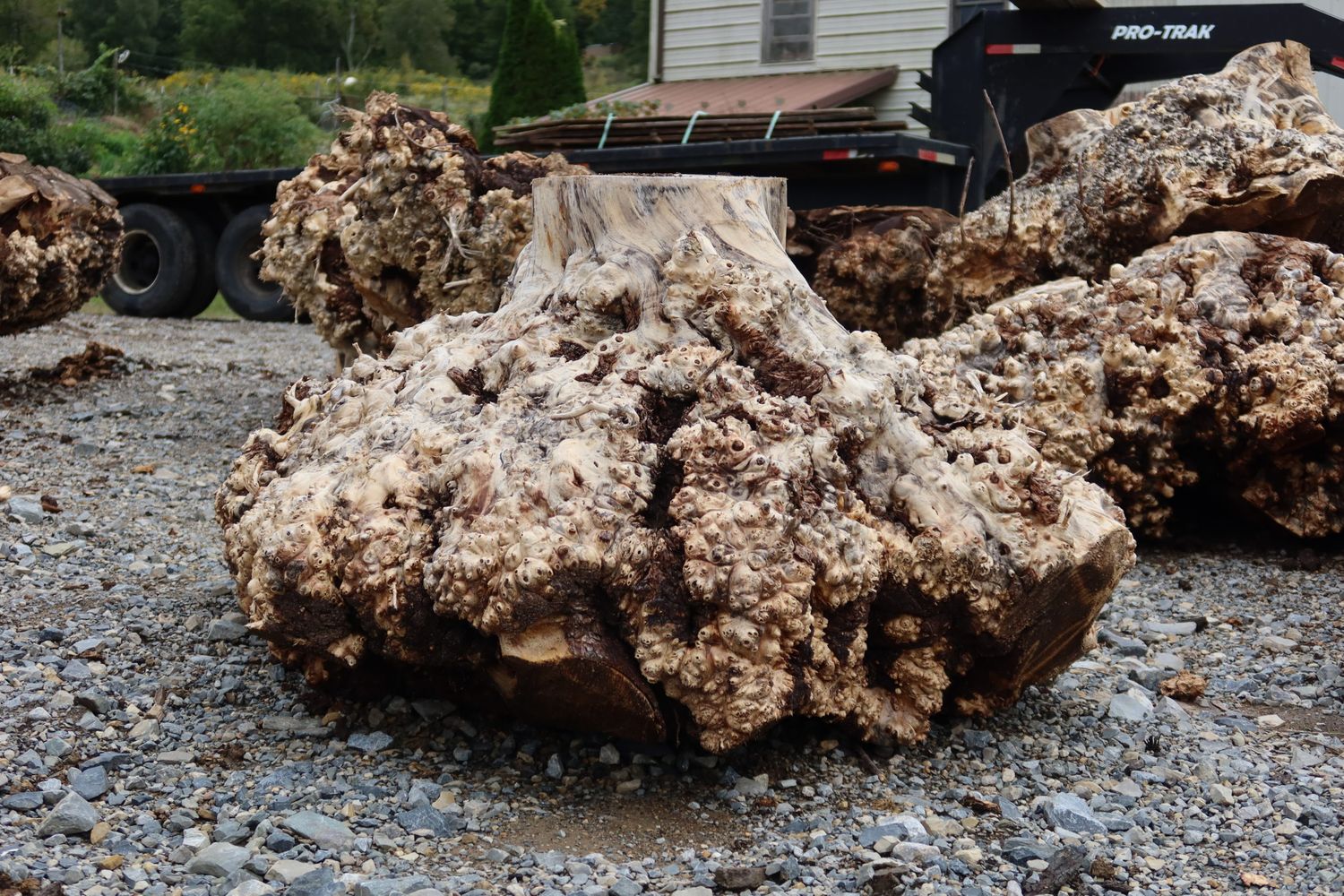
Redwood, walnut, and imported burls get slabbed soon after they arrive. But buckeye burl and maple rest up to a year as whole logs first. That patience lets natural color creep through the wood and deepen its figure, and it's a big part of why our buckeye looks the way it does.
Resting does something else just as important: the log gives up its moisture slowly, on its own terms. Wood pushed to dry too fast checks and cracks, and a slab that moves years later is a table that fails years later.
The slabbing itself happens on our bandsaw mill, a long way from the Alaskan chainsaw mill that started this business in 2011. Oversized and gnarled logs that other sawmills turn away are exactly the ones we're after.
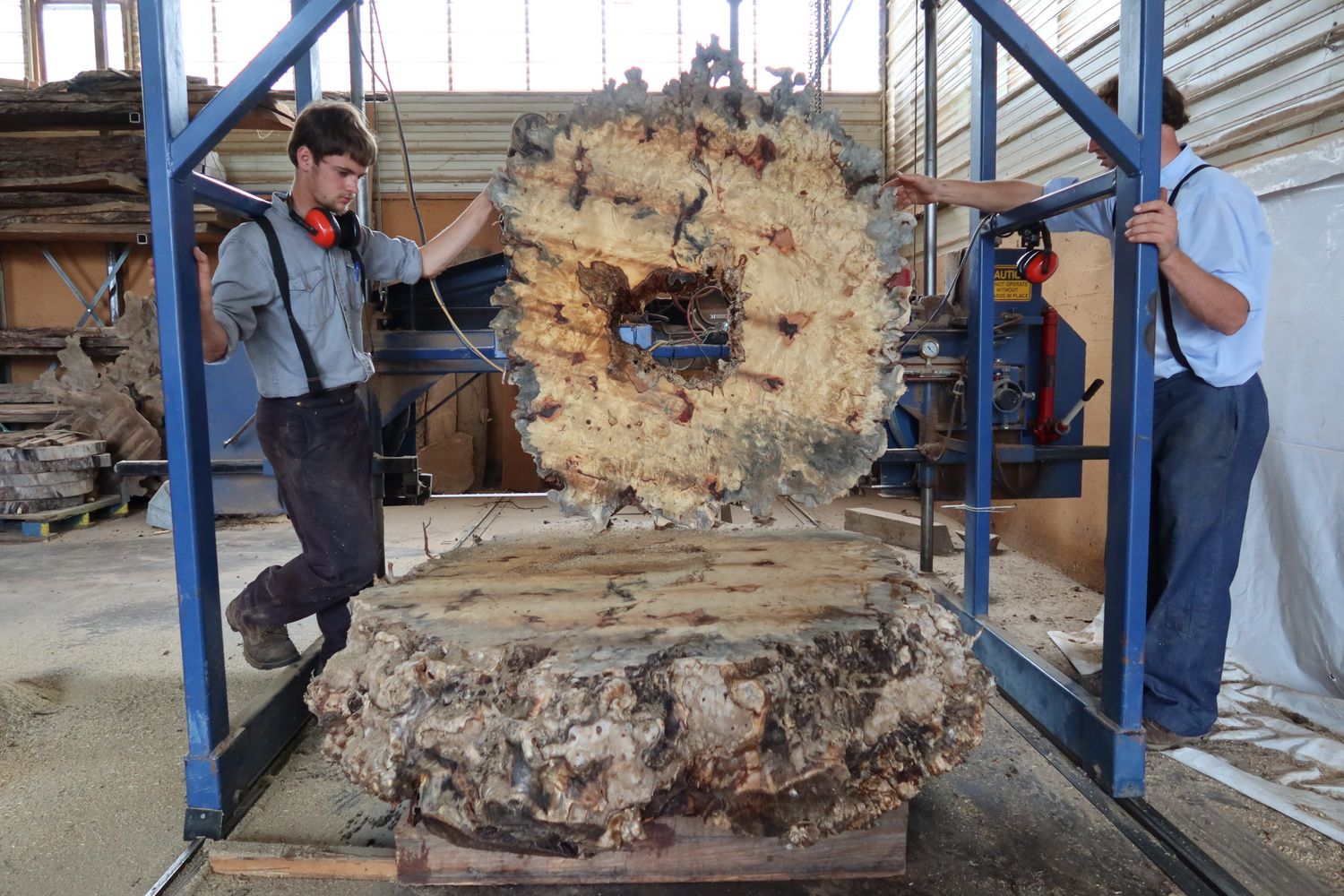
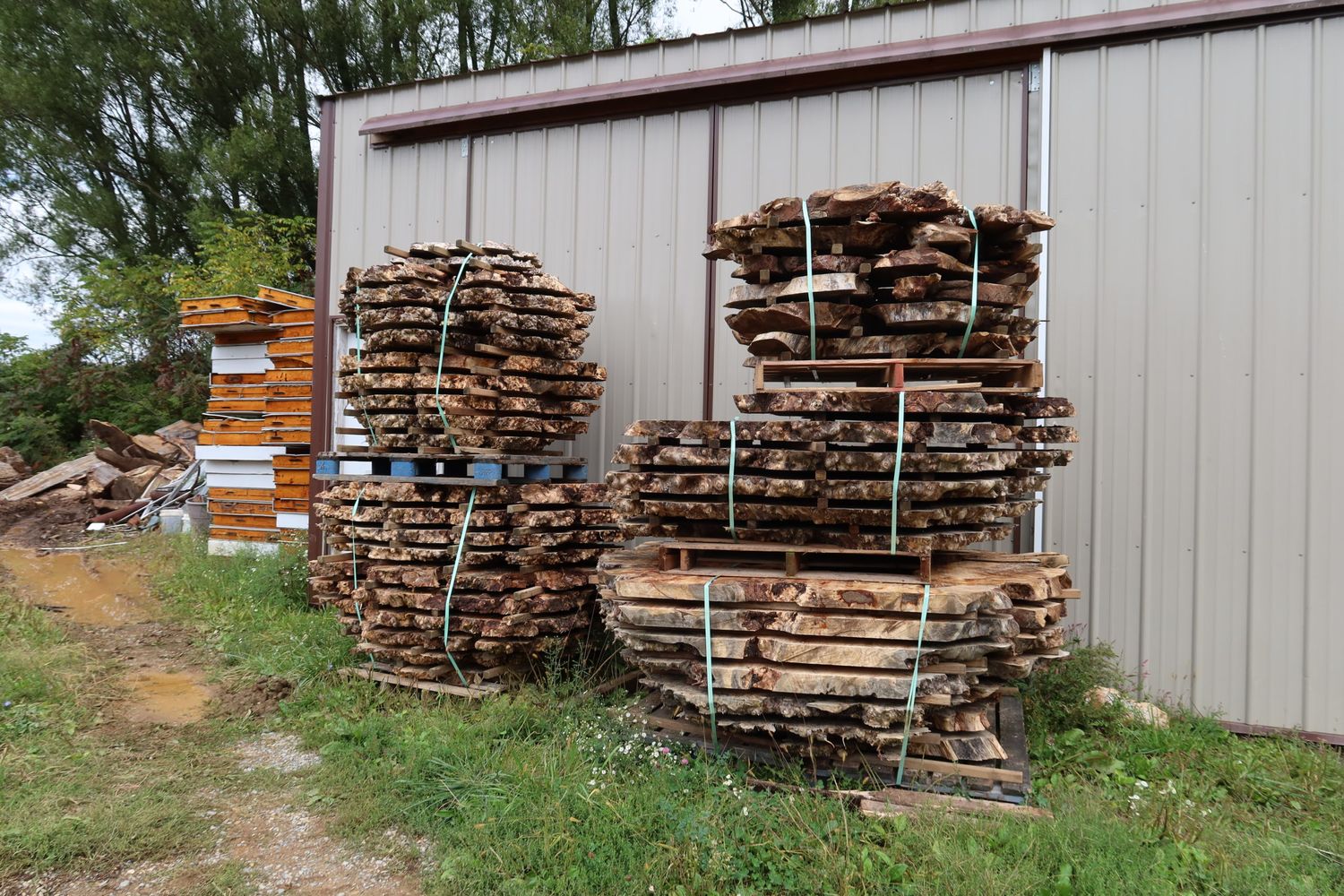
Fresh slabs air-dry in stacks for about a year. Then they finish in our own lumber kiln, which brings the moisture down to where a table will stay flat and stable in a modern home.
Dried slabs move into a climate-controlled warehouse and wait for the right project. When you order a custom piece, this warehouse is where its slab comes from.
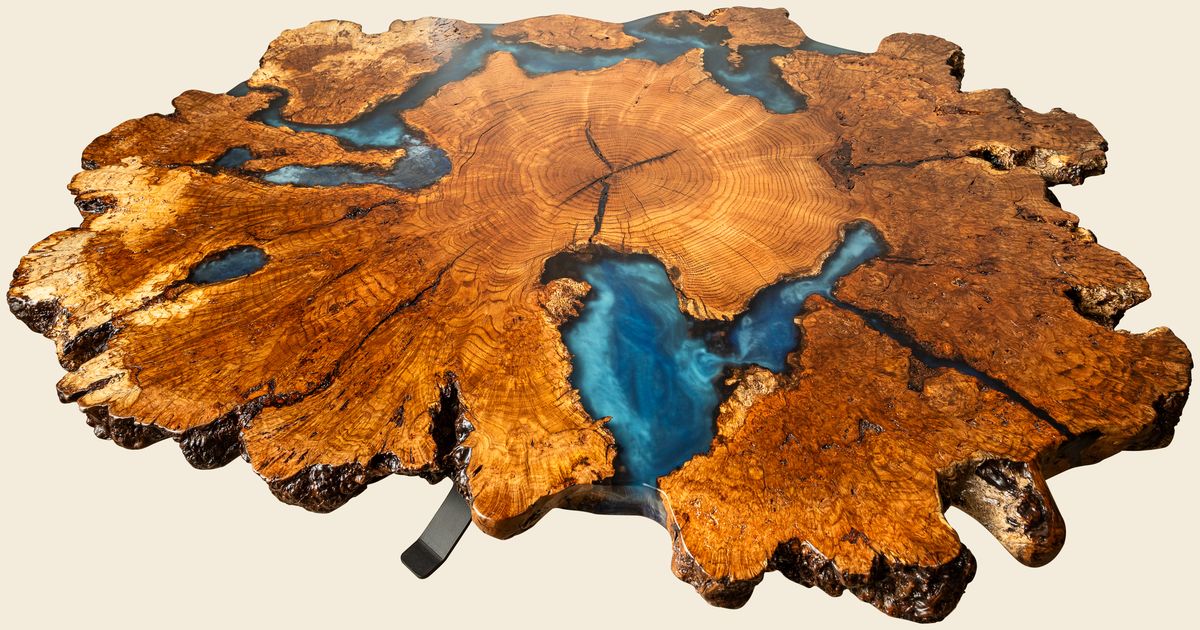
Many pieces that leave the shop are river tables: two live edge slabs joined by a river of epoxy. Many others are a single live edge slab where the epoxy fills the knots, cracks, and hollows instead. A single table can take as much as thirty gallons, poured in stages, stabilizing cracks and locking the wild edges in glass.
The river is where a table gets personal. It can be tinted nearly any color, and it can hold things that matter. An upscale fishing lodge in Wyoming sent us sand from their own creek, and it's set into the bottom of their table's river today.
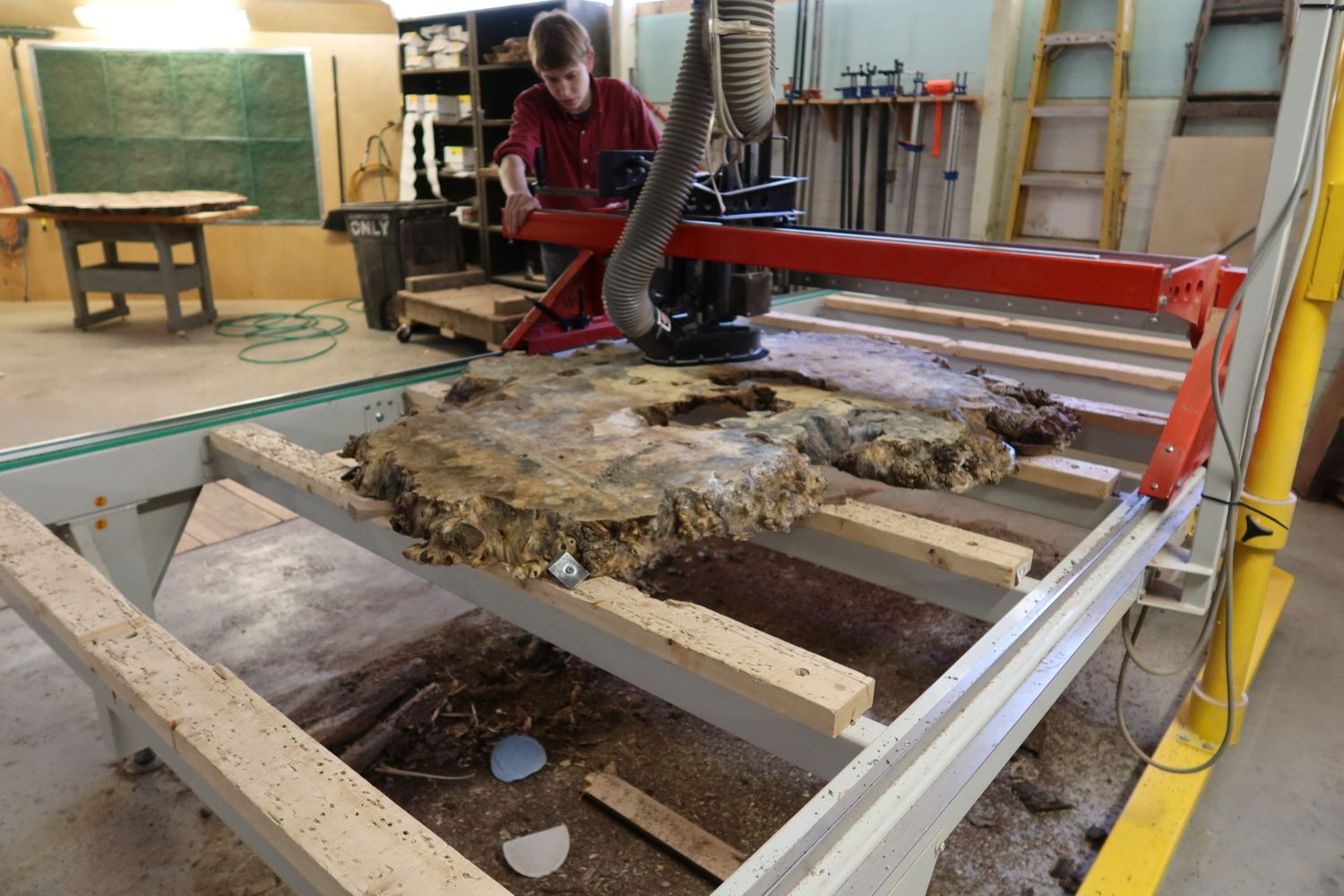
Big slabs get surfaced dead flat on our WoodWizz planer, a machine sized for slabs most shops can't handle.
Hours of hand sanding through finer and finer grits, until the grain reads like glass under your hand.
Which finish a piece gets depends on the wood and how the piece will be lived with. Whatever it takes, it goes on by hand and gets checked by eye. About three weeks after the slab is settled, the table is done.
Tell us the piece and the room. We'll match the right slab, and the slow work starts.
